

Home — Medical Dermatology — Skin Infections
MEDICAL DERMATOLOGY · INFORMATIONSkin Infections
Detailed information on the symptoms, routes of transmission, prevention methods, and when to consult a dermatologist for common fungal, viral, and parasitic skin infections. You can click any of the topics below to jump directly to the relevant section.
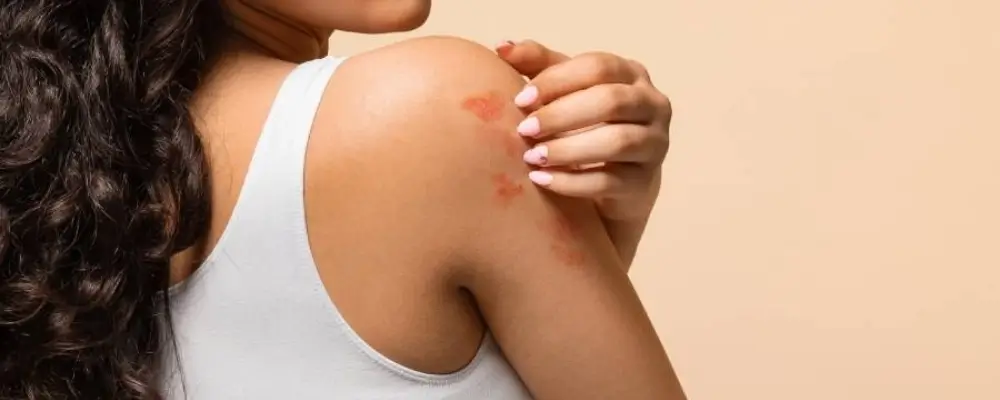
Fungal Infections
Fungal skin diseases (superficial fungal infections) are common infections that affect the upper layer of the skin, skin folds, and moist areas. They are most often caused by fungi called dermatophytes and by certain types of yeast. Warm and humid environments make it easier for fungi to multiply.
They are contagious and may spread through direct contact or via shared items and environments such as towels, slippers, and communal showers. They are given different names depending on the area of the body affected.
Symptoms
- Red, scaly, itchy patches, often with a ring-shaped appearance featuring central clearing and a well-defined border
- Itching, maceration, cracking, and scaling between the toes (athlete’s foot)
- Itchy, well-demarcated redness in the groin and skin folds
- Scaling and localized hair loss on the scalp, particularly in children
Common types
Depending on the location, common types include athlete’s foot (tinea pedis), jock itch (tinea cruris), ringworm of the body (tinea corporis – ring-shaped), and scalp ringworm (tinea capitis).
Transmission and contributing factors
Direct contact, shared towels, slippers or shoes, swimming pools, and changing rooms can facilitate transmission. Sweating, tight and poorly ventilated footwear, prolonged exposure to moisture, and conditions that weaken immune defenses (such as diabetes) can increase the risk.
Everyday precautions
Keeping the skin—especially the spaces between the toes—dry, choosing breathable fabrics and footwear, and avoiding sharing personal items can be helpful. Because fungal infections can sometimes resemble conditions such as eczema, an accurate diagnosis is preferable to prolonged self-treatment with over-the-counter products.
When should you see a specialist?
A dermatologic evaluation is recommended for lesions that persist, spread, or recur; involve the nails or scalp; or have an uncertain diagnosis.
Why is diagnosis important?
Fungal infections may be confused with eczema, psoriasis, or other rashes. In particular, using corticosteroid creams without a confirmed diagnosis may temporarily suppress redness while allowing the fungal infection to spread and altering its appearance. When needed, skin scrapings or microscopic examination may be used to look for fungal elements. Involvement of the scalp, nails, or large body areas can affect both treatment duration and medication choice.
Treatment and prevention of recurrence
Topical antifungal treatments may be sufficient for limited skin infections, whereas widespread or resistant cases may require oral therapy. Treatment should not be stopped as soon as symptoms improve; the recommended course should be completed. Airing out shoes, changing socks regularly, avoiding shared towels and slippers, and keeping skin folds dry can help reduce the risk of recurrence.
During breastfeeding
In general, dermatologic evaluation and appropriate treatment of fungal infections can be carried out during breastfeeding. When medication, a topical product, or a procedure is required, an appropriate option is selected by the specialist.
↑ Back to topNail Fungus (Onychomycosis)
Nail fungus (onychomycosis) is a fungal infection of the nail and most commonly affects the toenails. It can cause thickening, discoloration, and brittleness. It develops slowly and is often persistent because it is unlikely to resolve on its own; it commonly occurs together with athlete’s foot.
It is often painless in the early stages, so recognition may be delayed. Because nails grow slowly, treatment can take a long time and requires patience.
Symptoms
- Thickening and distortion of the nail
- Yellow, white, or brown discoloration
- Brittleness, crumbling, and fraying at the edges
- Separation of the nail from the nail bed and, occasionally, odor
Transmission and risk factors
Warm and humid environments, communal showers and pools, tight footwear, sweating, and nail trauma increase the risk. Diabetes, circulation problems, and older age are also contributing factors.
Everyday precautions
Keeping the feet dry, using breathable shoes and socks, not sharing nail-care tools, and treating any coexisting athlete’s foot can be helpful.
When should you see a specialist?
Dermatologic evaluation is recommended to confirm the diagnosis (because conditions such as psoriasis may look similar), and when there is spread, pain, or an associated condition such as diabetes. Specialist follow-up is important because treatment can be prolonged.
Is every thickened nail caused by fungus?
No. Nail trauma, psoriasis, age-related changes, and several other nail disorders can resemble onychomycosis. Confirming the diagnosis is especially important when long-term oral antifungal treatment is being considered. A nail sample may be examined by microscopy, culture, or other appropriate laboratory methods.
Why does treatment take so long?
Even when medication controls the fungus, the damaged nail does not return to normal immediately. A healthy nail must grow out again from the base to the tip.
During breastfeeding
In general, nail fungus can be evaluated and an appropriate treatment plan can be made during breastfeeding. When medication, a topical product, or a procedure is required, an appropriate option is selected by the specialist.
↑ Back to topHPV / Warts
Warts (verrucae) are benign skin growths caused by the human papillomavirus (HPV). They have different types depending on their appearance and location. They can spread through contact and may also spread to other areas of the same person’s body. They are common in children and young adults.
Many warts may regress spontaneously over time, but some can be persistent or spread.
Types and symptoms
- Raised, rough common warts on the hands and fingers
- Inward-growing plantar warts on the soles that may be painful with pressure
- Small, flat flat warts on the face
- Genital warts are a separate category and should always be evaluated by a specialist
Transmission
Direct skin contact, shared surfaces such as poolside areas and communal showers, and small breaks in the skin can facilitate transmission. Scratching or picking at a wart may spread it to other parts of the same person’s body.
Everyday precautions
Avoiding picking at or cutting warts, not sharing towels or slippers, and wearing slippers in communal areas can be helpful. At-home attempts to cut or burn warts should be avoided.
When should you see a specialist?
Dermatologic evaluation is recommended for warts that persist, spread, are painful, or affect walking; for warts on the face or genital area; and for lesions that change rapidly or have an uncertain diagnosis.
Why can warts recur?
Even after the visible part of a wart disappears, HPV may remain in the surrounding tissue for some time. New lesions can therefore develop after cryotherapy, electrocautery, topical treatments, or other methods. Recurrence does not necessarily mean treatment has failed; immune response and viral persistence vary from person to person.
Which warts should definitely be evaluated?
Lesions that grow rapidly, bleed, have an uncertain diagnosis, or are located on the face or genital area should be assessed by a dermatologist. Plantar warts may be confused with calluses.
During breastfeeding
In general, warts can be dermatologically evaluated and appropriate treatment methods can be used during breastfeeding. When medication, a topical product, or a procedure is required, an appropriate option is selected by the specialist.
↑ Back to topHerpes Zoster (Shingles)
Herpes zoster (shingles) occurs when the virus that remains dormant in the nerve roots after a previous episode of chickenpox becomes reactivated. It typically causes a painful, blistering rash along a band of skin (a dermatome) on one side of the body. It is more common in older adults and in people with weakened immune defenses.
Pain, burning, or tingling is often felt in the affected area before the rash appears. Early evaluation is important for the course of the condition.
Symptoms
- Pain, burning, or tingling in a specific area before the rash
- Clusters of blisters on a red base appearing a few days later
- A band-like distribution, usually on one side of the body and not crossing the midline
- Sometimes significant and difficult-to-manage pain
Situations requiring particular attention
Shingles around the eye or on the forehead carries a risk of ocular involvement and requires urgent evaluation . Especially in older adults, nerve pain that persists after the rash resolves (postherpetic neuralgia) may develop.
Transmission
Fluid from active blisters can transmit the virus and cause chickenpox in people who have never had chickenpox or have not been vaccinated. The rash should therefore be kept covered, and contact with pregnant people, infants, and immunocompromised individuals should be avoided.
When should you see a specialist?
When typical symptoms are noticed, it is recommended to seek medical attention without delay , because treatment started early may favorably affect the course. A rash around the eye or a severe presentation requires urgent evaluation.
Why is early treatment important?
Starting antiviral medication early in shingles can help control the course of the disease, particularly in older adults or people with severe pain. Involvement around the eye, the tip of the nose, or the ear; a widespread rash; high fever; or a condition affecting the immune system warrants more rapid evaluation.
Pain after shingles
Burning, stabbing, or electric-shock-like pain may continue in the same area after the rash has healed. This is known as postherpetic neuralgia. If the pain persists, it may require separate treatment rather than simply waiting for the skin lesions to resolve.
During breastfeeding
In general, shingles can be evaluated and appropriate antiviral treatment can be used during breastfeeding. When medication, a topical product, or a procedure is required, an appropriate option is selected by the specialist.
↑ Back to topHerpes Simplex (Cold Sores)
Herpes simplex is an infection caused by the herpes simplex virus (HSV), most commonly appearing as cold sores on or around the lips and mouth. The virus remains dormant in the body and may reactivate in response to various triggers, recurring in the same area.
It is particularly contagious while blisters are present. In most people, the lesions crust over and heal within several days to two weeks.
Symptoms
- Tingling, itching, or burning in the area before the lesion appears
- Followed by clusters of small, fluid-filled blisters
- Blisters breaking, crusting over, and then healing
- A tendency to recur in the same area
Triggers
Sun exposure, febrile illnesses, stress, fatigue, and hormonal changes (for example, around menstruation) may trigger reactivation.
Transmission
It can spread through close contact, such as kissing or sharing cups and towels, particularly when a cold sore is active. Extra care should be taken around infants, people with eczema, and immunocompromised individuals.
When should you see a specialist?
Dermatologic evaluation is recommended for frequent recurrences, severe or widespread disease, symptoms around the eye (which require urgent assessment because of possible ocular involvement), and in people with eczema or weakened immunity.
Why do cold sores recur?
After the initial infection, the herpes simplex virus can remain dormant in nerve tissue and reactivate from time to time. Sun exposure, febrile illness, intense stress, sleep deprivation, and trauma around the lips may trigger outbreaks in some people. For frequent or very severe recurrences, preventive antiviral therapy may be considered instead of treating each episode separately.
During breastfeeding
In general, herpes simplex can be evaluated and appropriate antiviral treatment can be used during breastfeeding. When medication, a topical product, or a procedure is required, an appropriate option is selected by the specialist.
↑ Back to topScabies
Scabies is an infestation caused by a microscopic parasite (the scabies mite) that burrows into the skin and causes intense itching. Importantly, scabies is not a sign of poor hygiene. It spreads through close contact and commonly passes between people living in the same household.
Itching typically becomes more intense at night and may continue for some time even after successful treatment.
Symptoms
- Severe itching that is particularly noticeable at night
- Small red bumps and fine burrow tracks in the skin
- Common sites: between the fingers, wrists, elbows, armpits, waist, and genital area
Transmission
Prolonged skin-to-skin contact is the main route of transmission; shared bedding and clothing may occasionally play a role. People living in the same household or having close contact often need to be evaluated together.
Everyday precautions
Evaluating close contacts at the same time and washing and drying bedding and clothing at high temperatures can help limit spread. It is important to remember that itching may continue for a period after successful treatment.
When should you see a specialist?
Dermatologic evaluation is recommended when persistent itching worsens at night or similar symptoms spread within a household, so that the diagnosis can be confirmed and both the affected person and close contacts can be treated appropriately.
Why are household members treated together?
Treating only the person who is itching can lead to reinfestation. Household members or partners with close, prolonged skin contact should be evaluated during the same period even if they do not have symptoms. Itching that continues for several weeks after treatment does not always mean live mites are still present; the skin’s allergic response can persist for some time.
If treatment seems to have failed
Using an insufficient amount of medication, failing to reapply it after washing the hands, leaving close contacts untreated, or not following the recommended application time are common reasons treatment may appear unsuccessful.
During breastfeeding
In general, scabies can be evaluated and appropriately treated during breastfeeding. When medication, a topical product, or a procedure is required, an appropriate option is selected by the specialist.
↑ Back to topHead Lice (Pediculosis)
Head lice are small parasites that live on the scalp and are especially common in school-age children. They spread mainly through head-to-head contact and are not a sign of poor hygiene.
The most prominent symptom is itching. Eggs (nits) firmly attached to the hair shafts and, occasionally, moving lice may be visible.
Symptoms
- Itching of the scalp, especially at the nape of the neck and behind the ears
- Whitish eggs (nits) firmly attached to the hair shaft close to the scalp
- Moving lice that may occasionally be seen
- Small areas of redness or irritation caused by scratching
Transmission
Transmission occurs mainly through direct head-to-head contact and less commonly through shared items such as combs, hats, or pillows. Spread is common among school-age children and within families.
Everyday precautions
Checking close contacts, avoiding sharing items such as combs and hats, and removing eggs with a fine-toothed nit comb can be helpful. It is important to understand that head lice are not related to cleanliness.
When should you see a specialist?
Dermatologic evaluation can be helpful when lice persist or recur, when scratching causes irritation or infection, or when there is uncertainty about whether attached material is a nit or dandruff.
How can live lice and nits be distinguished?
Nits are eggs that adhere firmly to the hair shaft and do not flake away easily like dandruff. However, finding only empty egg cases in the hair does not necessarily mean there is an active infestation. Seeing live lice is important for diagnosis. The nape of the neck and the areas behind the ears should be examined carefully.
How can treatment be more successful?
An appropriate lice treatment should be used for the recommended duration and in the recommended amount, and treatment should be repeated at the specified interval when necessary.
During breastfeeding
In general, head lice can be evaluated and appropriately treated during breastfeeding. When medication, a topical product, or a procedure is required, an appropriate option is selected by the specialist.
↑ Back to topThe Right Evaluation for Your Skin Infection
Contact us for an accurate diagnosis and an individualized plan. Early evaluation is important for contagious conditions.