

Home — Aesthetic Dermatology — Filler Applications
AESTHETIC DERMATOLOGY · PROCEDUREFiller Applications
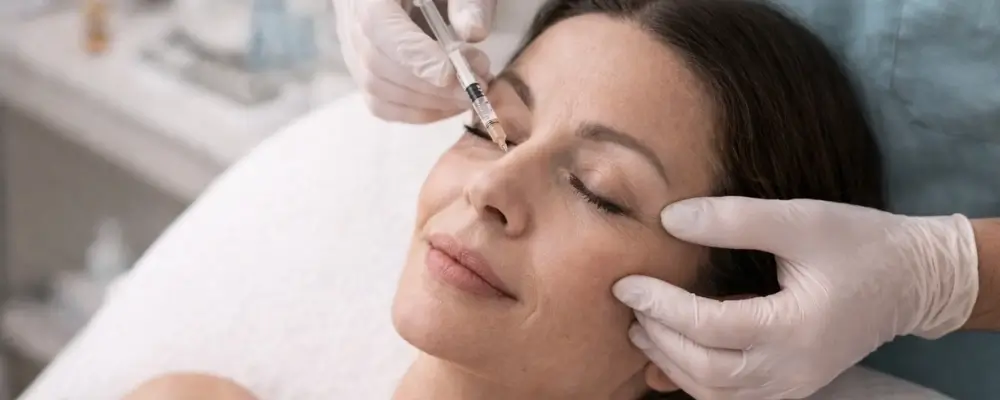
Filler applications are non-surgical procedures used to balance facial contours, restore volume lost with age and achieve a natural, rested appearance. The vast majority of these procedures are based on hyaluronic acid, which is naturally present in the skin, and can be reversed when necessary; in some procedures, products that stimulate the body's own collagen production are preferred. Below you will find detailed information on what each procedure does, how it is performed, its results and duration, and what to consider.
Lip Filler
Lip filler is a procedure performed mostly with hyaluronic acid-based products to give the lips volume, definition and hydration, and to balance lip shape and proportions. In addition to providing fullness to lips that have become thin over time or are genetically thin, it is also preferred for defining the lip border (vermilion) and correcting mild asymmetries. Hyaluronic acid is a molecule naturally present in the skin with a high water-binding capacity; this gives the lips not only volume but also a hydrated, vibrant appearance.
The aim here is not to apply the same template to every face, but a natural result free of exaggeration, suited to the person's lip structure, upper-lower lip ratio, smile line and expectations. A well-planned lip filler gives a fresher, more balanced look while preserving the lips' own shape. An "add a little, top up if needed" approach is often adopted, keeping the result controlled and natural.
What is it used for?
- Increased volume and fullness in thin lips
- Defining the lip border (vermilion) and shape
- Balancing the ratio between the upper and lower lip
- Softening the fine vertical lines around the lips (barcode lines)
- Supporting downturned corners of the mouth
- A more well-groomed look through added hydration and vibrancy
How is it performed?
Before the procedure, lip structure, proportions and expectations are evaluated; if necessary, the plan is drawn and explained. The procedure is performed by a specialist physician using a fine needle or a blunt-tipped cannula. A numbing cream can be applied for comfort; most products also contain lidocaine to reduce pain. The session is usually short and daily life can be resumed quickly afterwards.
Results and duration
The volume effect is mostly visible immediately; however, as there may be mild swelling in the first days, the final appearance settles within about 1-2 weeks. Hyaluronic acid fillers last 6-12 months on average in this area; since the lips are a mobile area, duration varies by person and metabolism. An important advantage is that it can be reversed by dissolving with a special enzyme (hyaluronidase) when desired or in the event of an irregularity.
Aftercare and precautions
In the first days, temporary swelling, tenderness, a slight feeling of unevenness or small bruises may occur; these usually subside quickly. In the first 24-48 hours, it is advised to avoid intense heat (sauna, Turkish bath), heavy exercise and pressure on the area. The procedure should be postponed in the presence of an active cold sore (herpes); if you have a history of recurrent cold sores, you should inform your physician, and preventive treatment can be planned if necessary. Use of blood-thinning medication may increase the likelihood of bruising.
Who is it suitable for?
- Those with naturally thin or asymmetric lips
- Those whose lip volume and contour have diminished with age
- Those who want natural, understated fullness and shape
How is a natural look achieved?
The key to naturalness is respecting the anatomical proportions of the lips, not overdoing volume in a single session and choosing the right technique. When necessary, volume is increased gradually over multiple sessions. The aim is a "well-cared-for" lip look, not a "done" one.
Product selection and lip anatomy
The flexibility, water-binding capacity and tissue integration of the hyaluronic acid used in the lips are decisive for the result. Very firm products can create an artificial feel in the mobile lip tissue, while products that draw excessive water can cause an overly swollen look. Therefore, product selection takes lip quality and mobility into account, separately from lip volume. Using a controlled amount in the first procedure and, if needed, a small top-up later provides a more predictable result for most people.
Lip filler during breastfeeding
There is generally no problem with performing it during breastfeeding. Before the procedure, the product used and the person's current health status are evaluated by the specialist physician.
When is the follow-up done?
Since the swelling in the first days can make the actual filler volume appear greater than it is, the final assessment is made after the edema subsides. At the follow-up, the lip border, symmetry, movement while smiling and the product's integration with the tissue are evaluated. If there is a minor asymmetry, rather than immediately adding a large amount of product, the tissue can be allowed to settle completely. If needed, a small top-up provides a more natural result.
Frequently asked questions
When does the effect settle and how long does it last? After the mild swelling of the first days subsides, the true result settles in 1–2 weeks; duration is mostly 6–12 months depending on the person and product.
Can the filler be dissolved? Yes; hyaluronic acid fillers can be dissolved with a special enzyme when necessary.
↑ Back to listChin / Jawline
Chin and jawline filler aims to balance the facial profile and lower-face proportions by defining the chin tip and the line extending from the chin to the ear. A receding or weak chin tip can affect the profile, the lip-chin balance and the overall proportion of the face; filler applied to this area provides a more defined, clear and balanced lower-face line. Viewed in profile, the chin is often the decisive area in terms of nose-lip-chin harmony (the aesthetic triangle).
As bone support and tissue tone decrease with age, the sharpness of the jawline may diminish and a slight sagging appearance may develop in the jowl area. Jawline filler helps improve this appearance by supporting the jawline from below and gives the face a fresher, more framed look. Since male and female facial anatomy differ (a more angular line in men, a softer line in women), planning is personalized according to gender and facial structure.
What is it used for?
- Projection of a receding chin tip and profile balance
- Defining and sharpening the jawline
- A more defined, balanced frame in the lower face
- Support in improving the appearance of mild laxity in the jowl area
- Harmonizing facial proportions (especially the profile)
How is it performed?
In this area, firmer, more durable and structuring (high-support) hyaluronic acid fillers are generally preferred, because the aim is not soft fullness but a support that carries the line. The procedure is performed by a specialist physician with a needle or cannula at designated points; a topical numbing cream can be used for comfort. Distribution across the chin tip, the gonial angle (jaw corner) and along the line is planned individually.
Results and duration
The contouring effect is largely visible immediately; as the mild swelling subsides, the line becomes more clearly defined. Because the products used are firmer in structure, duration is generally around 12-18 months and can be reversed with an enzyme when necessary.
Aftercare and precautions
Mild swelling or bruising subsides within a few days; in the first days, avoiding pressure on the area and intense heat is advised. The purpose of the procedure is not to "weigh down" the face but to support the existing contours in a balanced way; since excessive volume can spoil the natural look, personalized planning is important.
Who is it suitable for?
- Those with a receding or short chin tip
- Those with an undefined jawline and a weak face-neck transition
- Those who want to balance their profile
How does jawline filler affect the face?
A defined jawline gives the face a sharper, tighter and younger expression, and can also make a double chin appear less prominent. The procedure is planned by analyzing the balance of the face in frontal and side profile.
Why is balance in facial proportions important?
In jawline filler, merely sharpening the jawline is not enough. The projection of the chin tip, lower-face length, cheek volume, neck-chin angle and the width of the masseter muscles are evaluated together. In some faces, a small support to the chin tip can give a more natural result than a large amount of jawline filler. If submental fat or significant skin laxity is predominant, trying to achieve a sharp line with filler alone can make the lower part of the face look heavy.
Jawline filler during breastfeeding
There is generally no problem with performing it during breastfeeding. Before the procedure, the product used and the person's current health status are evaluated by the specialist physician.
What is evaluated at the follow-up?
After jawline filler, not only the frontal view but also the profile and three-quarter angle are evaluated. The continuity of the chin tip with the mandibular line, the right-left balance of the face and the neck-chin transition are checked. After the edema subsides, a small top-up can be done if needed. Proceeding in stages rather than using more product than necessary in the first session helps prevent the lower face from looking heavy.
Frequently asked questions
Is it also done for men? Yes; planning is differentiated by aiming for a more angular, strong line in men and a softer transition in women.
How long does it last? Depending on the product used, the effect mostly lasts 9–18 months.
↑ Back to listCheekbone
Cheekbone (cheek) filler restores the volume lost in the midface with age, providing a subtle lifting effect to the face. The midface is the "load-bearing" area of the face; volume loss here can contribute not only to hollow-looking cheeks but also to sagging in the lower face, deepening of the nasolabial (nose-to-mouth) folds and shadowing under the eyes. Therefore, the cheekbone area is usually evaluated not on its own but as part of the overall facial balance.
A well-planned cheekbone filler supports the midface from below and can therefore indirectly benefit the under-eye and nasolabial areas; sometimes the shadows and lines in these areas soften with cheekbone support alone, without treating them directly. Thus, rather than filling a single point, a fresher and more natural look is achieved by considering the overall balance of the face. Application at the right vector (direction) and depth tightens the face rather than emphasizing the "cheekbone".
What is it used for?
- Midface volume loss and hollow cheeks
- A fresher, more rested look with a subtle lifting effect
- Balancing facial proportions and cheekbone prominence
- Indirect support for the under-eye and nasolabial areas
- Rejuvenating and tightening the facial frame
How is it performed?
It is performed by a specialist physician with a needle or cannula, planned according to the midface's volume needs and facial structure; more supportive hyaluronic acid fillers are generally preferred. The procedure is brief and daily life can usually be resumed the same day.
Results and duration
The effect is largely visible immediately; as the mild swelling subsides, the result becomes clearer. Hyaluronic acid fillers last 12-18 months on average in this area and can be reversed when necessary.
Aftercare and candidate selection
There may be mild swelling or tenderness in the first days. For a natural result, it is important not to overfill the area and to preserve facial proportions; excessive filler can lead to a "heavy/puffy cheek" look. If significant skin sagging is predominant, filler alone may not be sufficient; in that case, a plan combined with tightening procedures is considered.
Who is it suitable for?
- Those experiencing volume loss in the cheekbone area
- Those bothered by midface flattening and a tired expression
- Those who want to give the face a natural contour
Naturalness in cheekbone filler
The aim of cheekbone filler is not to "puff up" the face, but to restore the support the midface has lost so that light reflects correctly on the face. With the right amount at the right point, the under-eye area can also be indirectly supported.
The difference between volume loss and sagging
Flattening in the cheekbone area does not always mean merely a lack of volume. Reduced bone support with age, displacement of fat pads and skin laxity may all play a role together. Therefore, while a small amount of filler may suffice when volume loss is limited, tightening methods or a different combination may be more appropriate in cases of significant laxity. The aim is not to enlarge the cheeks, but to support the load-bearing points of the midface in a balanced way.
Cheekbone filler during breastfeeding
There is generally no problem with performing it during breastfeeding. Before the procedure, the product used and the person's current health status are evaluated by the specialist physician.
How is the result evaluated?
The follow-up for cheekbone filler is not based solely on whether cheek prominence has increased. The light reflections of the midface, the under-eye to cheek transition, movement while smiling and the overall balance of the face are examined together. After the edema of the first days subsides, the true contour is seen more clearly. If volume is insufficient, a gradual top-up can be planned; avoiding excess volume is important for naturalness.
Frequently asked questions
How long does the effect last? Since the area has little movement, duration is generally long; the effect is mostly seen for 9–18 months.
Will my face look overdone? A natural result is targeted with gradual, measured application; the amount is determined at the examination according to facial proportions.
↑ Back to listTemple
Temple filler fills out the upper facial frame by restoring volume to the temporal area that hollows over time. Hollowing in the temples can make the upper part of the face look more angular, tired and older, cause the tail of the brow to droop and make the facial frame look "drawn in". Supporting this area in a balanced way softens the facial contours, providing a more rested, fuller and youthful appearance.
The temple area is anatomically related to the brow, the eye area and the cheekbone. Filler applied here can also refresh the gaze by giving slight support to the tail of the brow and create a smoother transition between the upper and middle face. For this reason, the temple is usually addressed not on its own but as part of a plan that evaluates the upper-middle face holistically.
What is it used for?
- Correcting hollow temples and adding fullness to the upper face
- Filling out the upper facial frame and softening angular lines
- Slight support to the brow tail and a more rested gaze
- Harmonizing the temple-cheekbone transition
How is it performed?
It is performed by a specialist physician using a needle or cannula with a hyaluronic acid filler suited to the area. Since the temple is an area that requires anatomical care in terms of vascular and nerve structures, the injection point and depth are chosen meticulously. The procedure is brief.
Results and duration
The effect is visible immediately; as the mild swelling subsides, the result settles. Hyaluronic acid fillers last 12-18 months on average and are reversible.
Aftercare and precautions
Mild swelling or tenderness subsides within a few days. Since the temple area is anatomically sensitive, it is especially important that the procedure is performed by a specialist experienced in this area.
Who is it suitable for?
- Those with hollowing and shadowing in the temple area
- Those whose upper face has thinned and whose brow tail appears droopy
- Those who want to rebalance the facial oval
Why does temple hollowing matter?
Temple filling is an often-neglected area that directly affects the facial frame; hollow temples can make the face look thinner, more tired and older than it is. Supporting the area also refreshes the gaze by slightly lifting the tail of the brow.
Why does the temple area require more careful planning?
The temple is an anatomically sensitive area dense with vascular and nerve structures, where injection depth directly affects the result. The product and technique are chosen after evaluating whether the volume loss is superficial or deep and its relationship to the brow tail and the cheekbone. Excess volume can make the upper part of the face look heavy, while a small but correctly placed amount of product can provide a more balanced transition. For this reason, temple treatment should be performed by an experienced physician.
Temple filler during breastfeeding
There is generally no problem with performing it during breastfeeding. Before the procedure, the product used and the person's current health status are evaluated by the specialist physician.
Follow-up and symmetry assessment
After temple filler, the two sides may not need exactly the same amount of product. Symmetry is checked by evaluating the hairline, the brow tail, the cheekbone and the transition to the forehead together. In the first days, mild edema can mask the true result. Once the tissue has settled, transitions can be softened with a small amount of additional product if needed; the aim is not to noticeably enlarge the temple, but to reduce the hollowing naturally.
Frequently asked questions
Will the treatment be noticeable? The aim is not a noticeable fullness but restoring balance to the facial contours; the result is mostly perceived as a "rested" expression.
How long does it last? Depending on the product, it is generally 9–18 months.
↑ Back to listNose Filler
Non-surgical nose filler (liquid rhinoplasty) is a procedure that uses hyaluronic acid to make adjustments without surgery, such as camouflaging the appearance of a hump on the nasal bridge, slightly lifting the nasal tip and balancing the profile. Because it is quick, involves almost no downtime and can be reversed when necessary, it can be an option for those who are not considering surgery or who only want minor corrections.
There is an important point here: this procedure does not make the nose smaller. On the contrary, by adding controlled volume at specific points, it makes the overall appearance of the nose smoother and more balanced. For example, a hump on the bridge can be camouflaged by adding volume above and below it to give the impression of a straighter line in profile; a drooping nasal tip can be slightly supported to appear more upturned. In other words, the goal is to improve profile harmony in nose types that require added volume.
What is it used for?
- Balancing the appearance of the hump on the nasal bridge
- Slightly lifting the nasal tip and profile harmony
- Camouflaging and correcting mild asymmetries
- Minor corrections before/after surgery (in suitable cases)
Important note — sensitive area
The nose is a vascularly sensitive area and one of the regions where caution is required regarding possible vascular complications. For this reason, it is especially important that the procedure is performed only by a specialist experienced in this field, following a detailed evaluation. Suitability should be evaluated separately in those who have had previous nose surgery (rhinoplasty), significant structural problems or a history of prior filler.
How is it performed?
It is performed by a specialist physician with a generally more structuring hyaluronic acid filler suited to nasal anatomy, in small amounts and in a controlled manner. The procedure is brief and, for most people, the result can be assessed in the mirror within a few minutes.
Results and duration
The effect is visible immediately. Since the nose is an area with little movement, duration is generally around 12-18 months and can be reversed with an enzyme when necessary. After the procedure, avoiding pressure on the area for a few days (including glasses, as advised by the physician) may be recommended.
Who is it suitable for?
- Those with a mild hump/dip on the nasal bridge who do not want surgery
- Those with a slightly drooping nasal tip
- Suitable candidates who want an idea of the appearance before surgery
The limits of non-surgical nose correction
Nose filler can camouflage minor irregularities, straighten the bridge and slightly lift the tip. However, it does not make the nose smaller and does not resolve breathing problems; surgery may be more appropriate for significant deformities. Since it is an area with a dense vascular network, it is especially important that the procedure is performed by an experienced physician.
Why does safety come before results?
Nose filler is one of the filler areas that requires the most careful approach in terms of the face's vascular anatomy. Therefore, small amounts, controlled planning and the appropriate anatomical plane are of great importance. Although it is possible to lift the nasal tip, optically correct the appearance of a hump or support the root, not every deformity can be corrected with filler. In cases of significant deviation, breathing problems or anatomical issues requiring surgery, an ENT or plastic surgery evaluation may be needed instead of filler.
Nose filler during breastfeeding
There is generally no problem with performing it during breastfeeding. Before the procedure, the product used and the person's current health status are evaluated by the specialist physician.
Why is the follow-up important?
In nose filler, an early follow-up is important not only to evaluate the aesthetic result but also circulation and tissue health. Unusually severe pain, progressively increasing pallor, discoloration or any vision-related symptom after the procedure requires urgent evaluation. In normal healing, the profile line and symmetry are re-examined after the edema subsides; if necessary, a very small correction is made.
Frequently asked questions
How long does the effect last? Duration is generally around 9–12 months; it may vary by person.
Can I wear glasses after the procedure? In the first days, it is advised to avoid heavy glasses that press on the nasal bridge.
↑ Back to listUnder-Eye Light Filler
Under-eye light filler aims to soften a tired, worn-out look by reducing the hollow under the eyes (tear trough) and the shadowing associated with it. By making the transition between the under-eye area and the cheek look smoother, it gives the area a more rested, brighter expression. Due to its thin skin, mobile structure and vascular proximity, it is a procedure that requires very careful planning and experience.
The success of this procedure depends largely on correct candidate selection. This is because the cause of under-eye darkness is not always hollowing: sometimes a pigment (color) difference, sometimes vessels visible through thin skin, and sometimes bags (fat herniation) are predominant. The approach differs in each of these situations, and filler is only meaningful when there is a true volume/hollowing deficit.
What is it used for?
- A tired look due to under-eye hollowing and the associated shadowing
- Softening the transition between the under-eye area and the cheek (tear trough)
- A brighter, more rested expression in the area
How is it performed?
It is performed by a specialist physician with hyaluronic acid fillers specific to this area — softer and with a low tendency to swell — mostly using a blunt-tipped cannula, in a deep plane and in small amounts. The approach of adding a little and topping up when needed is especially important in this sensitive area.
Precautions / candidate selection
While significant benefit is achieved in hollowing-related cases, this procedure alone may not be suitable in cases of pronounced edema/bags or darkness caused solely by pigment (color); it may even lead to unwanted appearances such as swelling or discoloration (Tyndall effect) in the area. Therefore, a detailed evaluation before the procedure is essential; sometimes cheekbone support or different methods may be more appropriate.
Results and duration
The final appearance becomes clear within a few weeks as the area settles and any mild edema resolves. It lasts 9-18 months on average and can be reversed when necessary.
Who is it suitable for?
- Those with hollowing and shadowing (dark circles) under the eyes
- Those bothered by a tired, sleepless expression
- People with suitable skin quality and realistic expectations
The difference between light filler and classic filler
In under-eye light filler, more fluid, lower-density products specific to the area are used; the aim is not so much to add volume as to soften the hollow, reduce the shadow and correct light reflection. It may not be sufficient on its own for those with pronounced bags or darkness due to skin color; correct candidate selection is decisive.
Not every under-eye hollow is suitable for filler
Apart from volume loss, under-eye darkness can result from increased pigment, thin skin, a prominent vascular structure or bags. In people with pronounced under-eye bags, lymphatic drainage problems or a constant tendency to edema, filler can increase swelling. Therefore, the decision should be made not just by looking at a photograph but by examining the face from the front and the side. In a suitable person, application in a small amount and in the correct plane aims to soften the transition between the under-eye area and the cheek.
Under-eye light filler during breastfeeding
There is generally no problem with performing it during breastfeeding. Before the procedure, the product used and the person's current health status are evaluated by the specialist physician.
Edema and the follow-up process
Since the under-eye tissue is thin and sensitive to lymphatic circulation, swelling may last longer than a few days in some people. Therefore, the fullness seen early on should not be regarded as the final result. At the follow-up, the homogeneous distribution of the product along the under-eye area, the tendency to edema and the cheek transition are examined. If there is persistent swelling or a superficial appearance, the cause should be evaluated rather than adding more product.
Frequently asked questions
Will my dark circles go away completely? Significant improvement is achieved in shadowing due to hollowing; additional approaches may be needed for darkness caused by color (pigment).
How long does it last? Since the area has little movement, the effect can mostly last 9–12 months or more.
↑ Back to listRussian Lips
Russian Lips (the Russian lip technique) is not a separate product or a different substance; it is the application of hyaluronic acid filler with a specific placement approach. In this technique, the aim is to lift the lip vertically upward from the base toward the center while keeping forward projection limited, achieving a more "lifted" look close to a heart shape — flatter and wider when viewed from the front, with a defined peak.
While classic lip filler mostly adds forward volume to the lip, in the Russian technique the emphasis is on the center of the lip and its vertical height. This can provide a more pronounced yet still natural-looking result, especially in people with low lip height. Since the technique requires more injection points in the lip tissue and meticulous distribution, the practitioner's experience directly affects the result.
Why is it preferred?
- A look that lifts the lip and increases vertical height
- A natural heart shape with limited forward projection
- People who want definition at the center of the lip
- Balanced volumizing in structures with low lip height
How is it performed?
It is performed by a specialist physician with a hyaluronic acid filler suited to the lip structure. Due to the nature of the technique, the result may sometimes be built gradually over multiple sessions rather than in a single session; this supports a more controlled and more natural result.
Results and duration
Since hyaluronic acid is used, the result is reversible; duration is 6-12 months on average. As the swelling of the first days subsides, the final shape becomes clear. Because it involves more injection points, swelling may be slightly more noticeable in the early period.
Aftercare and precautions
In the first days there may be swelling, tenderness or small bruises; these subside quickly. It is postponed if there is an active cold sore, and a history of recurrent cold sores should be reported to the physician. Which technique (Russian, French or classic) is suitable is determined according to the person's lip anatomy and expectations.
Who is it suitable for?
- Those who want vertical height and a defined contour rather than volume in the lips
- Those who prefer a "heart"-shaped lip look that opens upward rather than forward
- People whose lip structure is found suitable for this technique
What makes the Russian lips technique different
While in classic lip filler the volume is placed mainly in the body of the lip, in the Russian lips technique the product is placed in fine vertical lines from the base of the lip toward the edge. Thus, instead of "puffing" forward, the lip opens upward and a flatter, more defined contour is achieved.
Technique matters more than the amount of product
In the Russian Lips approach, the aim is not only to increase volume but to support vertical height in a controlled way, especially in the middle of the lip. The thickness of the lip tissue, its natural curve and the presence of previously applied filler affect the suitability of the technique. If there is excessive or uneven previous filler, the existing filler may need to be evaluated instead of adding new product. More than the name of the technique, an injection plan and dose distribution suited to the person's anatomy are decisive for a natural result.
Russian Lips during breastfeeding
There is generally no problem with performing it during breastfeeding. Before the procedure, the product used and the person's current health status are evaluated by the specialist physician.
How is it assessed in the first weeks?
In the Russian Lips technique, since noticeable swelling may occur in the upper lip in the first days, the vertical height and contour may look stronger than they actually are. After the edema subsides, lip closure, movement while smiling, the cupid's bow and the ratio to the lower lip are evaluated. If a follow-up is needed, it is done with small corrections; adding an unnecessary amount of product to accentuate the technique is avoided.
Frequently asked questions
Can it be applied to every lip? The decision is made by evaluating lip anatomy and previous fillers; in those with residual old filler, dissolving may be needed first.
Is its duration different from classic filler? It is similar; it mostly lasts 6–12 months and varies by person.
↑ Back to listFrench Lips
French lips is, again, not a product but a placement approach. In this technique, rather than a noticeable enlargement, a natural, subtle and balanced fullness is targeted. By creating a soft emphasis especially in the middle of the lip, a "less but chic" result is aimed for — hard to notice, yet refreshing to the face. The lip's own proportions are preserved; a fine fullness is added to the existing shape with a measured amount of product.
This approach may be suitable for people who do not want it to be noticeable that their lips have been enhanced and who are only looking for a more well-groomed, hydrated and fresh look. It prioritizes adding natural fullness without disrupting the existing lip shape; for this reason, it is often a good starting option for those having filler for the first time or who are cautious.
Why is it preferred?
- Natural, subtle and balanced fullness
- Soft emphasis in the middle of the lip, an understated look
- Subtle enhancement for people who do not want to look "done"
- A cautious start for those having filler for the first time
How is it performed?
It is performed by a specialist physician with a hyaluronic acid filler suited to the lip structure. Because of the natural-result goal, a small amount and controlled planning are generally preferred; if needed, it can be completed in a second session.
Results and duration
Since it is performed with hyaluronic acid, it is reversible; duration is 6-12 months on average. As a small amount of product is used, swelling is generally milder and the result settles quickly.
Aftercare and precautions
There may be mild swelling or tenderness in the first days. It is postponed if there is an active cold sore. Which technique (French, Russian or classic) is suitable is determined individually.
Who is it suitable for?
- Those who want a fine, elegant lip emphasis rather than pronounced volume
- Those who want to softly define the lip contour and expression
- First-time filler patients who prioritize naturalness
Who do French lips suit?
French lips is a technique that adopts a "less is more" approach, emphasizing the natural lines of the lip with refined elegance instead of exaggerated fullness. It is especially preferred by people with a thin lip structure who want to preserve their natural look.
How is the lip contour preserved?
In the French lips technique, while the upper lip contour and cupid's bow are made more defined, it is important to preserve natural lip movement. Giving too much product can create heaviness or increased projection in the upper lip. Therefore, lip length, tooth show, the smile line and the ratio to the lower lip are evaluated together. The name of the technique alone does not guarantee the result; the right product, the right amount and anatomical planning are more important.
French lips during breastfeeding
There is generally no problem with performing it during breastfeeding. Before the procedure, the product used and the person's current health status are evaluated by the specialist physician.
What is examined at the follow-up?
In French lips treatment, after the edema subsides, the cupid's bow, upper lip contour, midline symmetry and lip closure at rest are evaluated in particular. The balance of the lip corners and whether the product moves naturally while smiling are also important. If needed, a small top-up can be done; proceeding in a controlled way rather than giving excessive volume in the first session provides a more natural result.
Frequently asked questions
How does it differ from Russian lips? While Russian lips target vertical height and a defined contour, French lips aim for more minimal fullness and a soft emphasis.
How long does it last? Since the amount used is small, the effect varies by person; it is mostly 6–12 months.
↑ Back to listRadiesse
Radiesse is a product composed of calcium hydroxylapatite (CaHA) microspheres. Unlike many other fillers, it works in two ways: it provides immediate volume and support to the treated area, and over time it stimulates the body's own collagen production (biostimulatory effect), contributing to the firmness, thickness and quality of the skin. Thanks to this feature, it not only adds volume but also helps strengthen the skin's structural support.
It is often preferred for jawline, cheek and profile support; and when applied diluted (hyperdilute), for areas where skin quality and tightening are desired, such as the face overall, neck, décolleté, backs of the hands and above the knees. Thanks to its collagen-stimulating effect, results are known to leave some contribution to skin quality even after the product's volume effect has passed. In thin areas where veins and tendons become prominent, such as the backs of the hands, it is a frequently used option for both volume and skin thickness.
What is it used for?
- Collagen stimulation and tightening along with volume
- Jawline, cheek and profile support
- Skin quality and tightening in areas such as the neck, décolleté, backs of the hands and above the knees
- Improvement in skin thickness and structural support
How is it performed?
It is applied by a specialist physician with a needle or cannula depending on the goal. It is used in a more concentrated form for volume purposes, and can be applied diluted in large areas (neck, décolleté, backs of the hands) for skin quality/tightening. Local numbing may be preferred for comfort.
Results and duration
While the volume effect is visible immediately, collagen-related tightening and improvement in skin quality become apparent within weeks. Duration is generally 12-18 months or longer; the collagen contribution may continue for some time afterwards.
Important difference and precautions
Radiesse is not hyaluronic acid; therefore, it cannot be quickly reversed by dissolving with an enzyme as with hyaluronic acid fillers. This makes careful planning and an experienced practitioner even more important. It is also not preferred in certain areas such as the lips. The appropriate area, candidate selection and technique are determined by the physician.
Who is it suitable for?
- Those experiencing reduced skin quality along with volume loss
- Those who want tightening and firming of the facial contours
- Those seeking rejuvenation in areas such as the backs of the hands
How does Radiesse work?
Radiesse is a calcium hydroxylapatite (CaHA)-based product; it provides immediate support in the treated area and stimulates the skin's own collagen production over time. In this respect, it is a "biostimulatory" (collagen-stimulating) approach, different from classic hyaluronic acid fillers.
Biostimulation and volume support
Radiesse is a product containing calcium hydroxylapatite microspheres, used not only for immediate volume but to support collagen production over time. In some areas it may be preferred in a more concentrated form for contour support, and in some applications diluted for skin quality. Product selection and dilution ratio vary according to the treatment area. Because it is not as easily reversible as hyaluronic acid fillers, the initial planning needs to be more cautious.
Radiesse during breastfeeding
There is generally no problem with performing it during breastfeeding. Before the procedure, the product used and the person's current health status are evaluated by the specialist physician.
Follow-up and result evaluation
In Radiesse treatment, the early contour support and the biostimulatory effect that develops over time are evaluated separately. At the follow-up visit, tissue integrity, symmetry and the presence of any firm or nodule-like area are examined. Since the collagen response takes time, the tissue response is awaited rather than applying additional product too early. The need for a subsequent session is determined individually according to the treatment area and goal.
Frequently asked questions
When is the effect seen? The initial support is noticed immediately; the main improvement due to collagen stimulation develops gradually over weeks to months and generally lasts 12–18 months.
Is it used in the lips? No; Radiesse is not suitable for the lips. The right product for each area is determined at the examination.
↑ Back to listSculptra
Sculptra is a collagen stimulator (biostimulator) containing poly-L-lactic acid (PLLA). It does not act like a classic filler that fills immediately; instead, it gradually stimulates the body's own collagen production over weeks and months, slowly restoring lost volume and improving skin quality. Because the result develops over time and naturally, others usually do not perceive a distinct "intervention"; they only notice a more rested and fresh appearance.
In this respect, Sculptra is particularly suitable for people experiencing widespread volume loss who want overall facial tightening rather than a single area. In addition to the face, it can also be used in areas where skin quality and firmness need support, such as the temples, neck, décolleté, backs of the hands and above the knees. The gradual nature of the effect makes the result more natural and balanced; rather than a sudden change, "gradually looking better" is expected.
What is it used for?
- Widespread volume loss and overall facial tightening
- Gradual, natural improvement in skin quality and firmness
- Support in areas such as the neck, décolleté, backs of the hands and above the knees
- A natural approach for people who do not want a noticeable "filler" look
How is it performed?
It is applied by a specialist physician to the planned areas and usually requires multiple sessions a few weeks apart. After the treatment, massage of the area according to a specific schedule may be recommended for homogeneous distribution of the product. The result becomes gradually more apparent with each session.
Results and duration
The effect is gradual; results are long-lasting and can often last up to two years. Since it is not a procedure with immediate results, the process requires some patience; the main change settles in the months after the sessions are completed.
Aftercare and precautions
There may be mild swelling, redness or bruising in the first days. Following the recommended massage schedule is important for the smoothness of the result. Appropriate candidate selection and area planning are done by the physician.
Who is it suitable for?
- Those experiencing widespread volume loss and skin laxity
- Those who want gradual, natural improvement rather than sudden change
- People seeking long-term collagen support
How does Sculptra work?
Sculptra is a collagen-stimulating product containing poly-L-lactic acid (PLLA). Instead of providing immediate volume, it enables the skin to regenerate its own collagen over weeks to months; the result is therefore gradual and natural. It is usually applied with a protocol of several sessions.
Why is a gradual result expected?
Unlike classic fillers, Sculptra develops its result largely through biostimulation. Part of the volume seen on the first day is due to the injection fluid and may decrease quickly; the real effect forms over weeks and months as the skin's collagen response develops. For this reason, treatment is usually planned as spaced sessions rather than a single high dose. The goal is not to enlarge the face all at once, but to provide more balanced tissue support over time.
Sculptra during breastfeeding
There is generally no problem with performing it during breastfeeding. Before the procedure, the product used and the person's current health status are evaluated by the specialist physician.
Why is patience needed during follow-up?
Since Sculptra results develop gradually, unnecessary additional product should not be applied early on with the thought that "it wasn't enough". At follow-ups, an examination is made for changes in facial volume, tissue quality, symmetry and nodule development. The treatment plan is usually shaped according to the collagen response over several months. Session intervals and the total number of applications may vary according to age, tissue loss and the targeted area.
Frequently asked questions
When will I see the result? After the temporary fullness of the first days disappears, the main effect begins within 4–6 weeks and develops over months; duration can extend up to 2 years.
How many sessions are needed? A protocol of 2–3 sessions at intervals of a few weeks is usually planned.
↑ Back to listSatin Filler
Satin filler, as the name suggests, is a procedure that aims to give the skin a smooth, natural, satin-like glow. Rather than shaping or adding noticeable volume, it focuses on providing a fresher, more vibrant and hydrated look by improving the skin's moisture balance and overall quality. In this respect, it can be thought of as a skin quality treatment (skinbooster approach) rather than a "filler"; instead of creating volume in the skin, it hydrates and supports the skin from within.
Over time, with sun, fatigue, smoking and moisture loss, the skin can become dull, and fine lines and dryness can become more pronounced. Satin filler helps soften this appearance by supporting the skin from within and gives the skin a healthy, natural radiance. The aim is a glow that comes from the skin's own quality, not one covered up with makeup.
What is it used for?
- Skin hydration, vibrancy and natural glow
- Softening fine lines and refreshing a dull appearance
- Skin quality in areas such as the face, neck, décolleté and backs of the hands
- Improvement focused on "skin care", not volume/shaping
How is it performed?
It is applied by a specialist physician superficially at many small points in the relevant area; a numbing cream may be preferred for comfort. The procedure is brief and, for the best result, is usually planned as part of an initial program (several sessions).
Results and duration
The glow and freshness effect becomes more apparent over time as the skin hydrates. For the best result, an initial program of several sessions followed by periodic maintenance (for example, every few months) is usually recommended. Since it is not a shaping filler, it is not suitable for expectations of noticeable volume.
Aftercare and precautions
There may be short-lived redness, small bumps or mild bruising at the injection points; these usually subside quickly.
Who is it suitable for?
- Those experiencing moisture loss, dullness and fine wrinkles in the skin
- Those who want skin quality and glow, not volume
- People aiming for a natural "glowing skin" look
How satin filler differs from classic filler
Satin filler (skin quality filler / skinbooster approach) aims to improve the skin's hydration, elasticity and surface quality rather than to shape. It spreads through the skin and works like a moisture reservoir from within; the result is perceived from the outside not as "filled" but as healthy, well-cared-for skin.
A skin-quality-focused approach
Treatments referred to as satin filler can be performed with more fluid hyaluronic acid formulations that, unlike classic volume fillers, aim to support hydration, radiance and fine texture quality in the skin. Since the composition and cross-linking properties of products vary by brand, "satin filler" does not mean a single standard product. Therefore, it should be clarified what product will be applied, which area it is approved for, and whether the expected effect is volume or skin quality.
Satin filler during breastfeeding
There is generally no problem with performing it during breastfeeding. Before the procedure, the product used and the person's current health status are evaluated by the specialist physician.
How is the result monitored?
Since the aim of skin quality treatments such as satin filler is not a dramatic increase in volume but a more hydrated, smooth and vibrant appearance, the result is evaluated with photographs and changes in skin texture. The small bumps at the injection points are expected to subside completely. If a repeat session is needed to maintain the effect, it is planned taking into account the product's properties, skin dryness and the person's skin-care routine.
Frequently asked questions
When is the effect seen and how long does it last? Radiance and hydration are felt in the first weeks; it is usually applied as a series of sessions and the effect is maintained for months.
Is it applied outside the face? Yes; it is also preferred in areas where skin quality has declined, such as the neck, décolleté and backs of the hands.
↑ Back to listPersonalized Planning for a Natural Result
Contact us for a balanced, natural plan suited to your facial structure and expectations.