

Home — Medical Dermatology — Acne, Rosacea and Sebaceous Disorders
MEDICAL DERMATOLOGY · INFORMATIONAcne, Rosacea and Sebaceous Disorders
Detailed information on the symptoms, types, possible causes and when to consult a dermatologist for common skin disorders involving the sebaceous glands and hair follicles. You can click any of the headings below to jump to the relevant section.
Acne (Pimples)
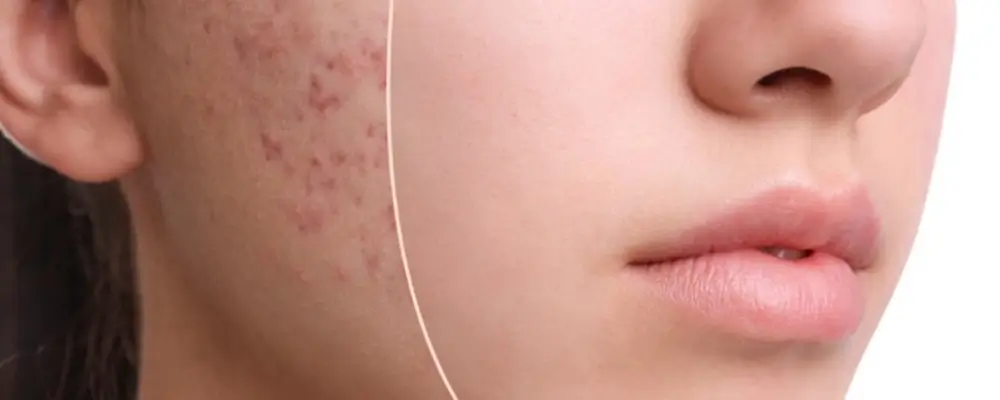
Acne is a chronic skin condition caused by blockage and inflammation of the hair follicles and their associated sebaceous glands. It commonly affects areas with a high density of sebaceous glands, such as the face, back and chest. Although it most often begins during adolescence, it can also occur in children and adults, particularly adult women.
Mild forms may involve only a few pimples, while more severe forms can cause widespread inflammatory lesions and permanent scarring. Because acne is visible, it may also affect self-confidence and daily life; for this reason, it should not be regarded merely as a "temporary skin problem."
Symptoms
The symptoms of acne vary according to the type of lesion:
- Blackheads and whiteheads (open and closed comedones)
- Red, raised pimples (papules)
- Pus-filled pimples (pustules)
- Deep, painful lumps under the skin (nodules and cysts)
- Red-brown marks or depressed/raised scars after healing
Types
Acne can be grouped as comedonal acne, in which only blackheads and whiteheads are present; papulopustular acne, characterized by inflammatory bumps; and nodulocystic acne, which involves deep nodules and cysts. The type and severity are important in determining the appropriate management approach.
Possible Causes and Triggers
The main mechanisms include excess sebum (oil) production, blockage of pores by dead skin cells, the role of Cutibacterium acnes and the inflammatory response. Factors that may trigger or worsen these processes include hormonal changes, genetic predisposition, stress, certain cosmetic products, friction and occlusive clothing, and some medications.
Everyday Care Considerations
In general, it is recommended to cleanse the skin gently twice a day, choose non-comedogenic products and avoid squeezing pimples. Manually squeezing lesions can increase the risk of inflammation and scarring. Because product and skin-care choices vary according to skin type, specialist evaluation can be helpful for long-term management.
When Should You See a Specialist?
Consultation with a dermatologist is recommended for widespread, scarring, painful (nodulocystic) acne or acne that does not improve with routine care. Evaluation is also advisable if acne is accompanied by symptoms such as irregular menstrual cycles or excessive hair growth.
How Is the Treatment Approach Determined?
Acne treatment is planned not only according to the number of current lesions, but also by considering comedones, inflammatory papules and pustules, nodules and the risk of scarring together. Topical treatments may be sufficient for mild acne, while more comprehensive therapies may be needed for widespread acne or cases with a high tendency to scar. Once active acne is under control, a separate plan can be created for red-brown marks and depressed scars.
To Reduce the Risk of Scarring
Squeezing deep and painful lesions, picking scabs and using excessively drying products without guidance can increase inflammation. Starting appropriate treatment early, reducing the formation of new nodules and using sun protection can help lower the risk of scarring.
During Breastfeeding
Dermatological evaluation and planning appropriate acne treatment during breastfeeding are generally possible. Any topical or systemic medication should be selected by the physician from options considered appropriate during breastfeeding.
How Long Does Treatment Take?
Acne is not a condition expected to disappear completely after only a few days of treatment. The effects of topical and systemic therapies generally emerge gradually over several weeks. Early in treatment, the number of new lesions is expected to decrease, followed by a gradual reduction in existing redness. Because stopping treatment too early may lead to recurrence, the care plan should be continued with follow-up visits.
↑ Back to listRosacea
Rosacea is a chronic skin condition characterized by persistent redness, sensitivity and occasional bumps, particularly in the central face. It tends to be more noticeable in fair-skinned individuals and most commonly appears in middle age. It can be confused with acne; however, the absence of blackheads and the prominence of persistent redness are distinguishing features.
The condition may progress with periods of flare-ups and remission. If left untreated, redness may become persistent, and some individuals may develop advanced findings such as thickening of the nasal tissue (rhinophyma).
Symptoms
- Persistent redness of the cheeks, nose, forehead and chin
- Visible superficial blood vessels (telangiectasia)
- Acne-like bumps and pustules without comedones
- Sudden flushing, burning or stinging sensations
- Dryness, redness and irritation of the eyes (ocular involvement)
Subtypes
Rosacea may present as an erythematotelangiectatic type dominated by redness and visible vessels, a papulopustular type with bumps and pustules, a phymatous type with tissue thickening, or an ocular type affecting the eyes. More than one pattern may occur in the same person.
Possible Triggers
- Sun exposure, hot weather and sudden temperature changes
- Spicy foods, hot beverages and alcohol
- Stress and intense physical exertion
- Certain harsh or alcohol-based cosmetic products
Everyday Care Considerations
Regular sun protection, choosing gentle non-irritating products and identifying and reducing personal triggers as much as possible may help keep symptoms under control.
When Should You See a Specialist?
Dermatological evaluation is recommended for persistent facial redness, increasing bumps, thickening of the nose or eye symptoms so that the condition can be diagnosed correctly and followed appropriately.
Why Does Treatment Vary From Person to Person?
In one person with rosacea, persistent redness and visible vessels may be the main concern, while another may primarily have acne-like bumps or eye symptoms. Therefore, medical treatment, barrier care and vascular laser procedures are not applied in the same sequence for everyone. The priority is to control the dominant finding and the trigger that has the greatest impact on daily life.
The Role of the Skin Barrier
Skin affected by rosacea may be more sensitive to hot water, harsh cleansers, intensive exfoliation and fragranced products. Gentle cleansing, regular moisturization and sun protection can help control redness. Introducing new products one at a time and in a controlled manner can reduce the risk of irritation.
During Breastfeeding
Dermatological evaluation and appropriate treatment during breastfeeding are generally possible. The choice of cream, medication or vascular laser treatment should be planned individually by a specialist physician.
↑ Back to listSeborrheic Dermatitis
Seborrheic dermatitis is a common chronic skin condition characterized by redness and greasy scaling in areas with a high density of sebaceous glands. It is not contagious and tends to alternate between flare-ups and quieter periods. Its mild form arises from the same underlying process as common dandruff.
It can occur at any age. In infants, it may appear on the scalp as "cradle cap," while in adults it most commonly affects the face and scalp. Because it is a chronic condition, the goal is usually long-term control rather than complete and permanent elimination.
Symptoms
- Dandruff, itching and redness of the scalp
- Yellowish, greasy scaling between the eyebrows, beside the nose and around the ears
- Red plaques in oily areas such as the center of the chest
- Occasional mild burning or tightness
Possible Causes and Triggers
Individual response to the naturally occurring Malassezia yeast on the skin, sebum production and personal predisposition all play a role. Cold and dry weather, stress, fatigue, sleep disruption and certain neurological conditions may worsen symptoms.
Everyday Care Considerations
Gently cleansing the area, avoiding excessively oily or irritating products and managing triggers may help reduce flare-ups. Because suitable skin-care products vary according to skin type, specialist advice can be useful for persistent or widespread symptoms.
When Should You See a Specialist?
Dermatological evaluation is recommended for persistent or spreading scaling and redness, severe itching or symptoms that affect daily life.
Why Does It Recur Periodically?
Seborrheic dermatitis may follow a chronic, fluctuating course. Stress, seasonal changes, lack of sleep, oily skin and the microbial balance of the scalp may contribute to worsening symptoms. Treatment involves not only calming flare-ups but also maintaining appropriate preventive care at intervals after symptoms improve.
Scalp and Facial Care
Using appropriate medicated shampoos on the scalp for the recommended contact time and choosing gentle products that do not disrupt the skin barrier on the face can be helpful. Vigorous scratching, harsh exfoliation and products with a high alcohol content may increase redness and scaling.
During Breastfeeding
Dermatological evaluation and appropriate treatment during breastfeeding are generally possible. Shampoo, cream or other medications should be selected by the specialist physician from appropriate options.
↑ Back to listPerioral Dermatitis
Perioral dermatitis is a skin condition that most often appears around the mouth with small red bumps and pustules. It may sometimes spread to the sides of the nose and around the eyes. It is most common in young and middle-aged women. Because it can resemble acne or rosacea, accurate differential evaluation is important.
A typical feature is the preservation of a narrow strip of normal skin immediately around the lips; in other words, the bumps generally do not extend all the way to the lip border. Mild burning and tightness may be more prominent than itching.
Symptoms
- Grouped small red bumps and pustules around the mouth
- Mild scaling, burning or tightness
- A distribution that spares the lip border, leaving a "clear zone"
- Occasional spread around the nose and eyes
Possible Causes and Contributing Factors
Although no single definite cause has been identified, prolonged use of potent corticosteroid (steroid) creams on the face is a commonly associated factor. Heavy moisturizers and some cosmetics, fluoride-containing toothpaste and hormonal factors may also contribute.
Everyday Care Considerations
It is generally helpful to avoid applying corticosteroid creams to the face without medical advice and to reduce heavy, multilayered products. Switching to a simpler skin-care routine may ease symptoms in some people, but the approach should be individualized.
When Should You See a Specialist?
Dermatological evaluation is recommended for persistent, recurrent or spreading redness and bumps around the mouth, especially if corticosteroid creams have previously been used on the face.
Why Can Inappropriate Products Prolong It?
With perioral dermatitis, heavy occlusive cosmetics and certain creams used without guidance may temporarily suppress the condition and later lead to a more pronounced flare-up. For this reason, simplifying the skin-care routine and reducing irritating products are important parts of management. Although the condition resembles acne, not every acne product is suitable for this skin.
Recovery Process
Symptoms may not disappear completely within a few days; gradual improvement over several weeks is expected after treatment begins. Temporary fluctuations may occur early on. Rather than stressing the skin by frequently changing products, it is important to follow a regular and simple care plan.
During Breastfeeding
Dermatological evaluation and appropriate treatment during breastfeeding are generally possible. Topical or, when necessary, systemic options should be selected by the specialist physician.
↑ Back to listFolliculitis
Folliculitis is inflammation of the hair follicles. It can occur on almost any hair-bearing area of the body; the beard area, legs, arms, back, chest and buttocks are commonly affected. Although it is often mild and temporary, in some cases the inflammation can become deeper and develop into more pronounced lesions.
It typically appears as small red bumps or pustules centered on a hair follicle, often with a hair emerging from the middle. Itching, mild pain and tenderness may accompany the lesions.
Symptoms
- Red bumps or inflamed pustules around hair follicles
- Itching, stinging or mild pain
- Grouped lesions, usually in hair-bearing areas
- Painful, firm swellings when deeper inflammation develops (boils/furuncles)
Types
The most common form is bacterial folliculitis, usually caused by staphylococcal bacteria. Other types include yeast-related Malassezia folliculitis, pseudofolliculitis associated with ingrown hairs after shaving, and folliculitis that can develop after exposure to hot tubs or pools.
Possible Causes and Triggers
Shaving and hair removal, tight clothing that causes friction, excessive sweating, prolonged exposure to humid environments, pore-clogging products and conditions that weaken the immune system may make folliculitis more likely to develop.
Everyday Care Considerations
Using shaving methods that do not irritate the skin, clean towels and clothing, avoiding prolonged time in sweaty clothes and choosing breathable fabrics are generally helpful. Squeezing or scratching the lesions may increase inflammation.
When Should You See a Specialist?
Dermatological evaluation is recommended when folliculitis is widespread, recurrent, persistent, deep or painful, or when symptoms such as fever are present.
What Is Evaluated in Recurrent Folliculitis?
When folliculitis repeatedly occurs in the same area, shaving habits, friction, sweating, tight clothing, oily products and hair characteristics are reviewed. In some cases, examination and additional tests may help distinguish bacterial from fungal causes. Using antibiotics or corticosteroid products that are not appropriate for the underlying cause can prolong the condition.
Relationship With Ingrown Hairs
Especially in the beard, groin and leg areas, hair growing back into the skin can cause redness and bumps around the follicle. Adjusting shaving technique, reducing friction and, in suitable patients, methods such as laser hair removal may help reduce recurrence.
During Breastfeeding
Dermatological evaluation and appropriate folliculitis treatment during breastfeeding are generally possible. Medications and, when necessary, device-based procedures should be selected by the physician.
↑ Back to listHidradenitis Suppurativa
Hidradenitis suppurativa (HS) is a chronic inflammatory condition characterized by painful swellings and recurrent abscesses, usually in areas where skin rubs together, such as the underarms, groin, beneath the breasts and buttocks. Importantly, HS is not contagious and is not caused by poor hygiene. Correcting this misconception is important because it can otherwise lead to unnecessary feelings of guilt.
The condition may progress through recurrent flare-ups, and over time interconnected tunnels under the skin (sinus tracts) and permanent scars may develop. Pain, drainage and visible lesions can significantly affect quality of life, making early recognition important.
Symptoms
- Painful red nodules and swellings in skin folds
- Recurrent draining abscesses
- Subcutaneous tunnels that develop over time (sinus tracts)
- Permanent scars and hardened tissue after healing
Stages
HS is commonly described using the Hurley staging system: Stage I involves isolated nodules or abscesses that heal without scarring; Stage II involves recurrent lesions and limited sinus tracts; and Stage III involves extensive areas with interconnected tracts and widespread tissue involvement. The stage is important in determining the management approach.
Associated Factors
Genetic predisposition, smoking, excess weight, hormonal factors and friction are associated with the course of the disease. Rather than being viewed as direct "causes," these are considered factors that may influence severity and progression.
Everyday Care Considerations
Lifestyle measures such as wearing comfortable clothing that reduces friction, smoking cessation and weight management may have a positive effect on the course of the disease. Attempting to squeeze the lesions is not recommended because it can worsen the condition.
When Should You See a Specialist?
If recurrent painful swellings and abscesses occur in skin folds, consultation with a dermatologist without delay is recommended, as early diagnosis is important for helping to slow progression.
Why Is Early Treatment Important?
Hidradenitis suppurativa may begin with recurrent inflammatory nodules and progress over time to tunnel formation and permanent scarring. Accurate diagnosis at an early stage is important for reducing the frequency of flare-ups and limiting tissue damage. The condition is not simply a hygiene problem and it is not contagious.
Treatment May Be Multistep
Depending on the stage of the disease, topical or systemic medications, injections, laser procedures and surgical methods may be used in different combinations. Smoking cessation, reducing friction and maintaining a healthy weight may support treatment in some individuals. Long-term follow-up is important because of the chronic nature of the condition.
During Breastfeeding
Dermatological evaluation and planning appropriate treatment during breastfeeding are generally possible. Any medication or interventional method should be selected by the specialist physician from options considered appropriate during breastfeeding.
Daily Measures to Help Reduce Flare-Ups
Tight clothing, friction, heavy sweating and traumatic shaving may worsen symptoms in some people. Non-irritating cleansing methods, appropriate clothing choices and maintaining a healthy weight may support medical treatment. Squeezing painful nodules or attempting to drain them at home is not recommended because it can increase the risk of infection and scarring.
↑ Back to listThe Right Evaluation for Your Skin Concern
Contact us to arrange a personalized evaluation and treatment plan for your symptoms.